
CT & MRI in 3D
Cinematic Quality
Reveal anatomy that traditional viewers miss — photorealistic 3D rendering of CT and MRI volumes with adjustable tissue highlighting, real-time cropping, and Window/Level control. Runs directly in your browser.
From scan to image in seconds
Load your data
- Open CT or MRI DICOM studies and image series — supports common DICOM transfer syntaxes, including uncompressed, RLE, and JPEG / JPEG 2000 (lossy and lossless) compressed images, from any scanner manufacturer.
- The browser demo uses preprocessed reference datasets. The native app imports DICOM files directly from PACS or local storage — data is processed locally and progressively organized for fast display.
See results immediately
- Visualization begins instantly and progressively refines to full detail. GPU acceleration ensures fluid rotation, zoom, and cropping even with large volumes.
- No need to wait for the complete dataset — start exploring anatomy right away with interactive frame rates.
Fine-tune the view
- Physically-based cinematic lighting reveals soft-tissue boundaries, vascular structures, and subtle density differences that standard renderers miss.
- Customize tissue highlighting to isolate bone, soft tissue, or vasculature with per-intensity opacity, color, and material control. Adjust Window/Level, crop regions of interest, and rotate freely — all in real time.
CT volume rendering screenshots
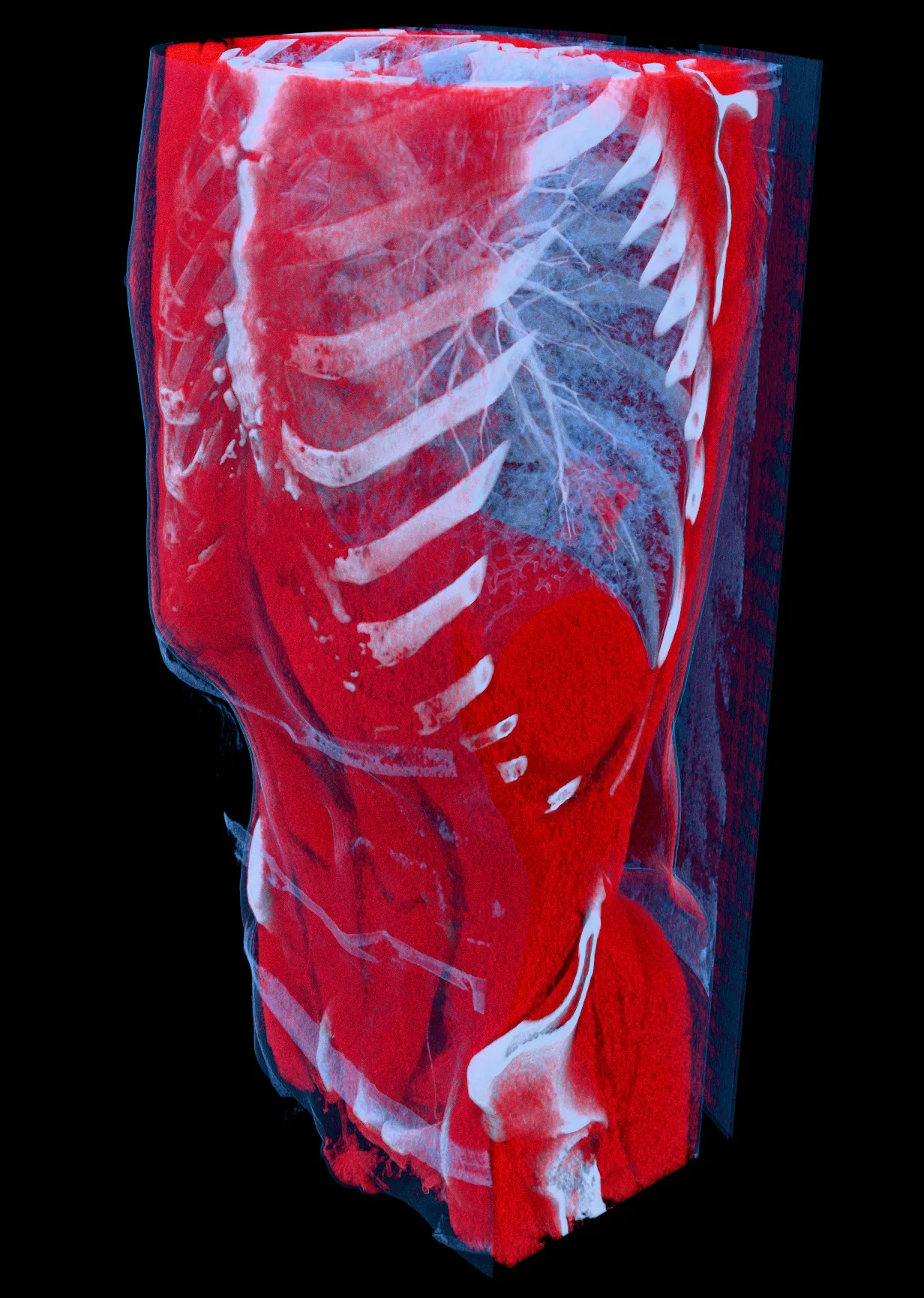
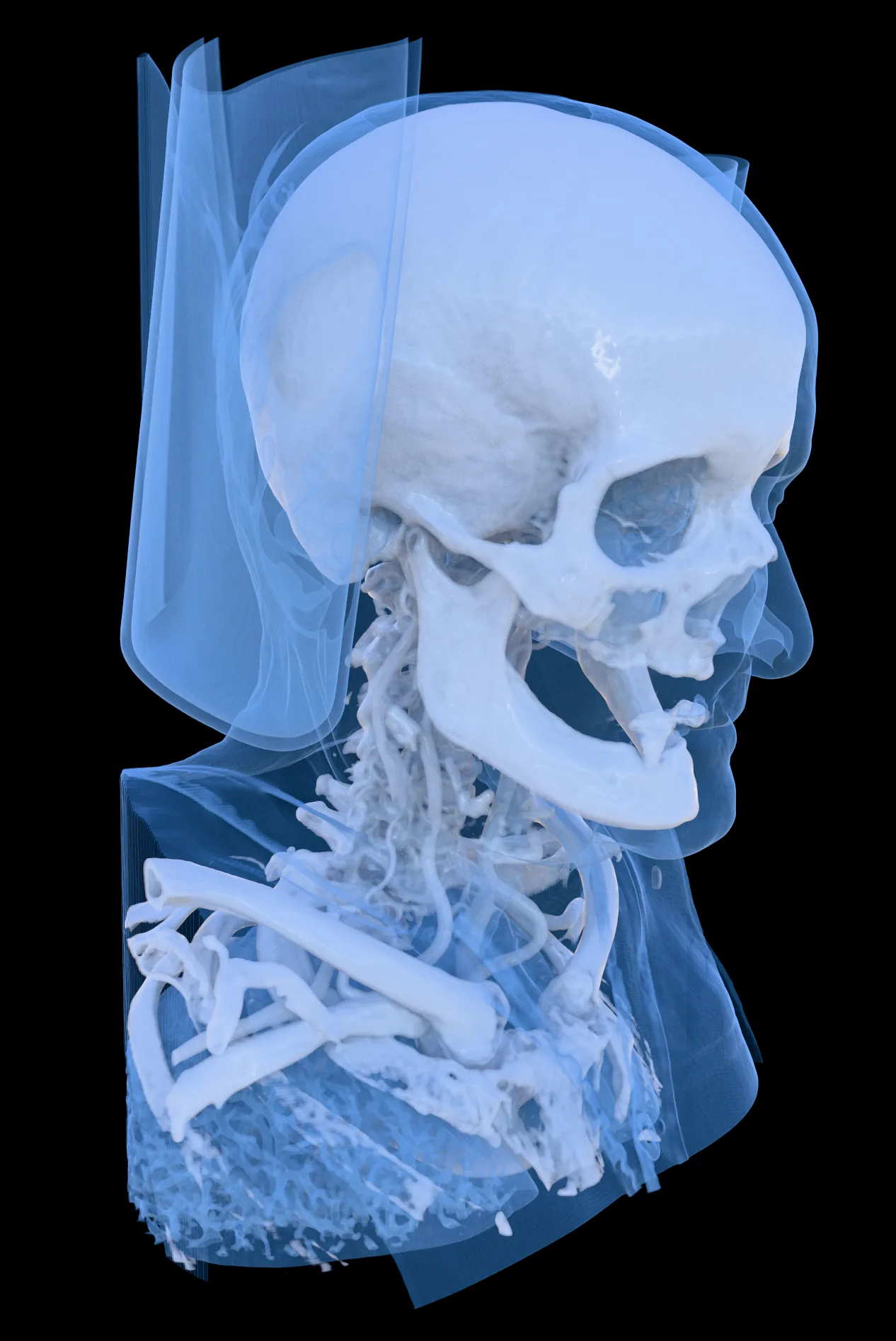
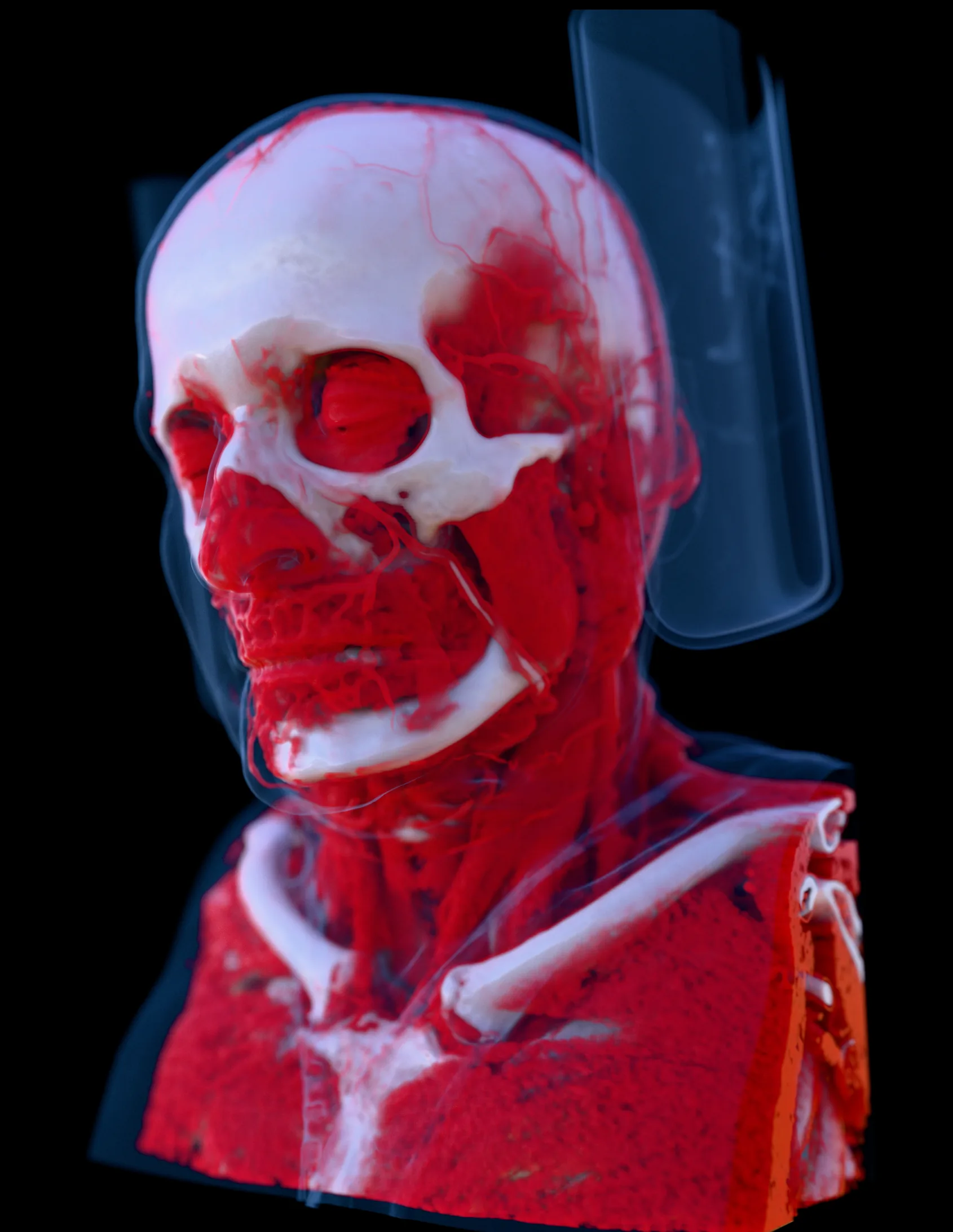
Reference renders from MANIX and MECANIX CT datasets show soft-tissue transfer functions, bone presets, transparent clipping volumes, and cinematic lighting directly from the 3D viewer.
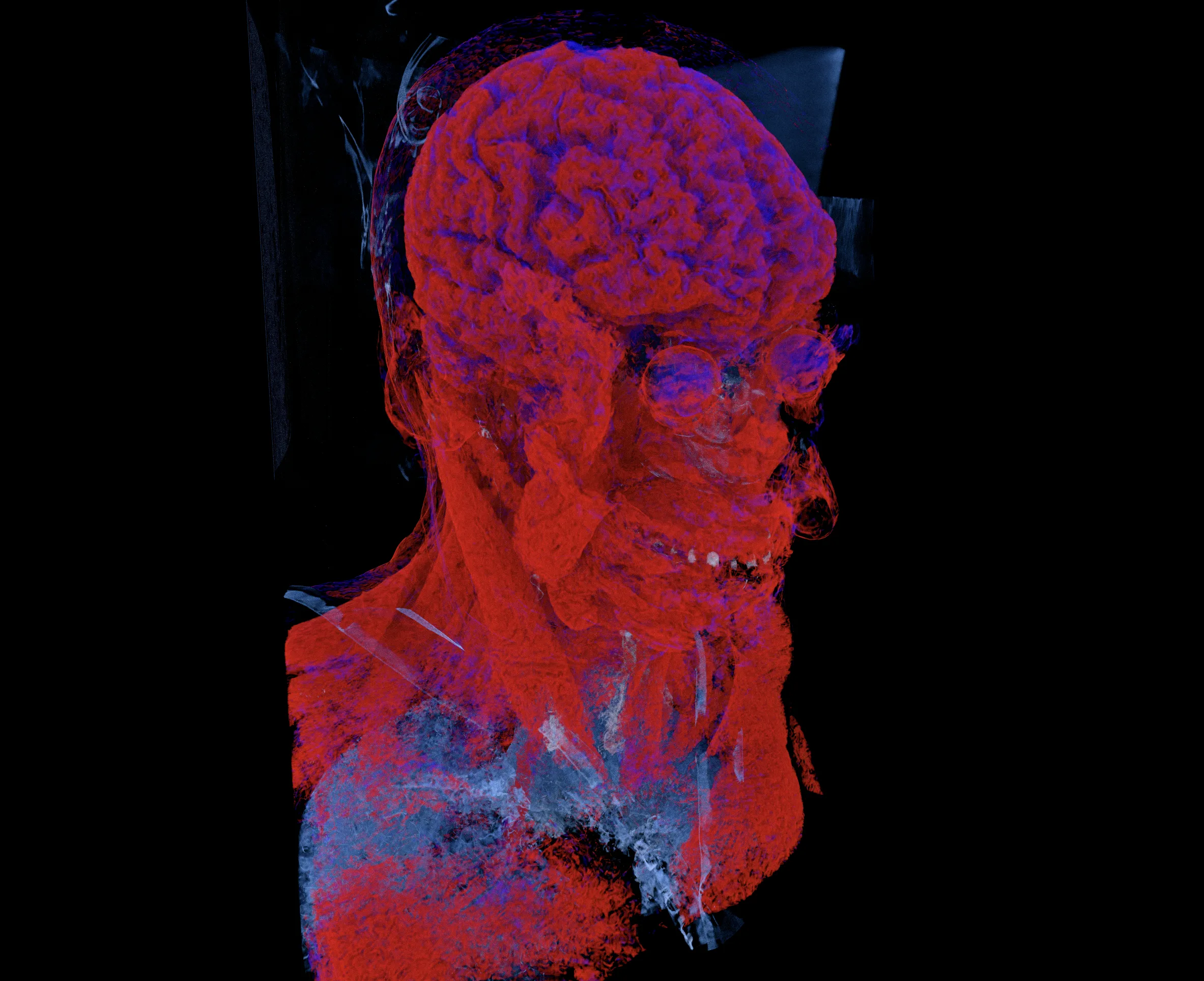
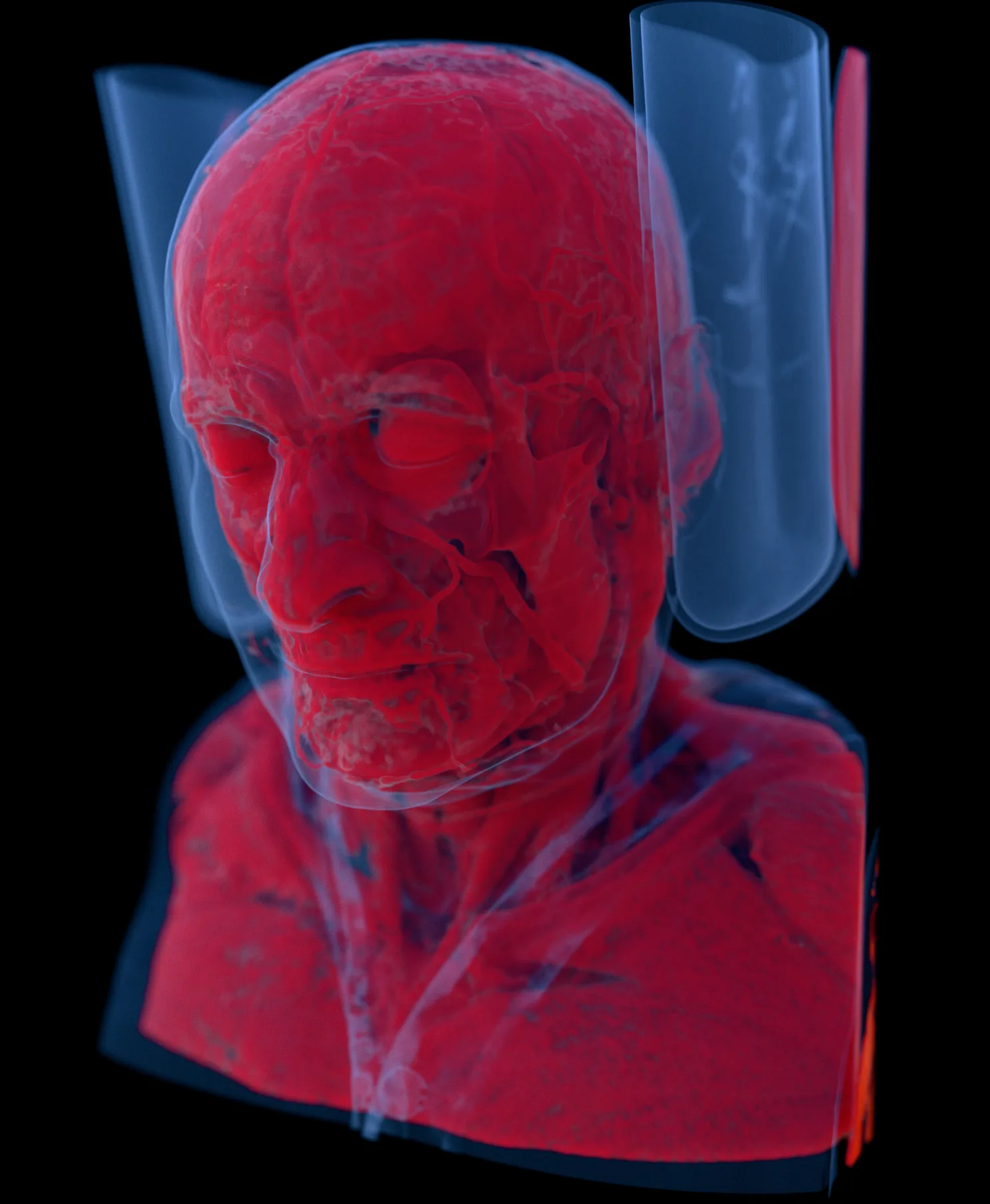
Head CT soft-tissue volume rendering
A MANIX head CT dataset rendered with a soft-tissue transfer function for vascular and brain structure visibility.
Under the hood
A cross-platform C++ application that runs natively on Windows, macOS, and Linux — and in the browser via WebAssembly. Desktop-class rendering quality with zero-install convenience.
Rendering engine
- Built on DiligentCore — unified GPU abstraction across Direct3D, Vulkan, Metal, and WebGPU for consistent image quality on every platform
DICOM processing
- Industry-standard DICOM parsing via pydicom — reads CT and MRI data from any scanner manufacturer
Cross-platform
- Runs natively on Windows, macOS, and Linux. In the browser — compiled to WebAssembly via Emscripten with desktop-class rendering quality and zero-install convenience
Browser compatibility
The browser version requires WebGPU. Use Chrome or Edge on any modern desktop — no additional software or IT approval needed.
Chrome / Edge
SupportedVersion 142+ with full WebGPU and all required extensions including texture-formats-tier1.
Safari
Not supportedCrashes with an unknown error during WebGPU initialization. No diagnostic messages available.
Frequently asked questions
How does cinematic rendering improve medical volume visualization?
Cinematic rendering uses physically-based light simulation to produce photorealistic 3D images of CT and MRI scan data. Unlike conventional volume rendering, it reveals soft-tissue boundaries, vascular structures, and subtle density differences through natural lighting and shadowing. This level of visual clarity helps radiologists identify anatomical details that standard viewers may miss, and helps surgeons better understand complex anatomy during pre-operative planning.
Can I view DICOM files with this tool?
The browser demo uses preprocessed reference datasets for instant visualization. A native desktop application with full DICOM import is in active development — it will open DICOM files directly from your PACS or local storage, with multi-planar reconstruction (axial, coronal, sagittal), Window/Level presets, and clinical measurement tools built in. Your data stays on your machine and is never uploaded. Sign up for early access to be notified when it launches.
Which browsers support this 3D medical volume viewer?
The viewer runs in Chrome 113+ and Edge 113+, which support WebGPU. Firefox and Safari are not yet supported due to missing GPU extensions. Simply open the link in Chrome or Edge on any modern desktop — no installation, plugins, or IT approval required. The application loads directly in your browser and is ready to use within seconds.
Is this viewer suitable for clinical radiology?
This is a visualization and exploration tool for reviewing CT and MRI data with cinematic rendering quality. It is not yet FDA-cleared or CE-marked for clinical diagnostics. However, it is valuable for medical education, case presentation, surgical planning review, and research. The upcoming native desktop version will include diagnostic measurement tools (ruler, ellipse ROI, angle) and is being developed with regulatory compliance in mind.
Native Desktop Version with DICOM Support
A native desktop application with full DICOM import, multi-planar reconstruction (axial, coronal, sagittal), and clinical measurement tools is in development. Sign up to get early access.
DICOM Import
Load DICOM series from your PACS or local storage — no preprocessing or format conversion required
Multi-Planar Reconstruction
Standard radiological views: axial, coronal, and sagittal planes with synchronized cross-reference lines and Window/Level presets for common modalities
Measurement Tools
Ruler, ellipse ROI, and angle measurement with real-world millimeter and Hounsfield Unit readouts
Offline & Cross-Platform
Runs locally on Windows, macOS, and Linux — no internet required, your data never leaves your machine